
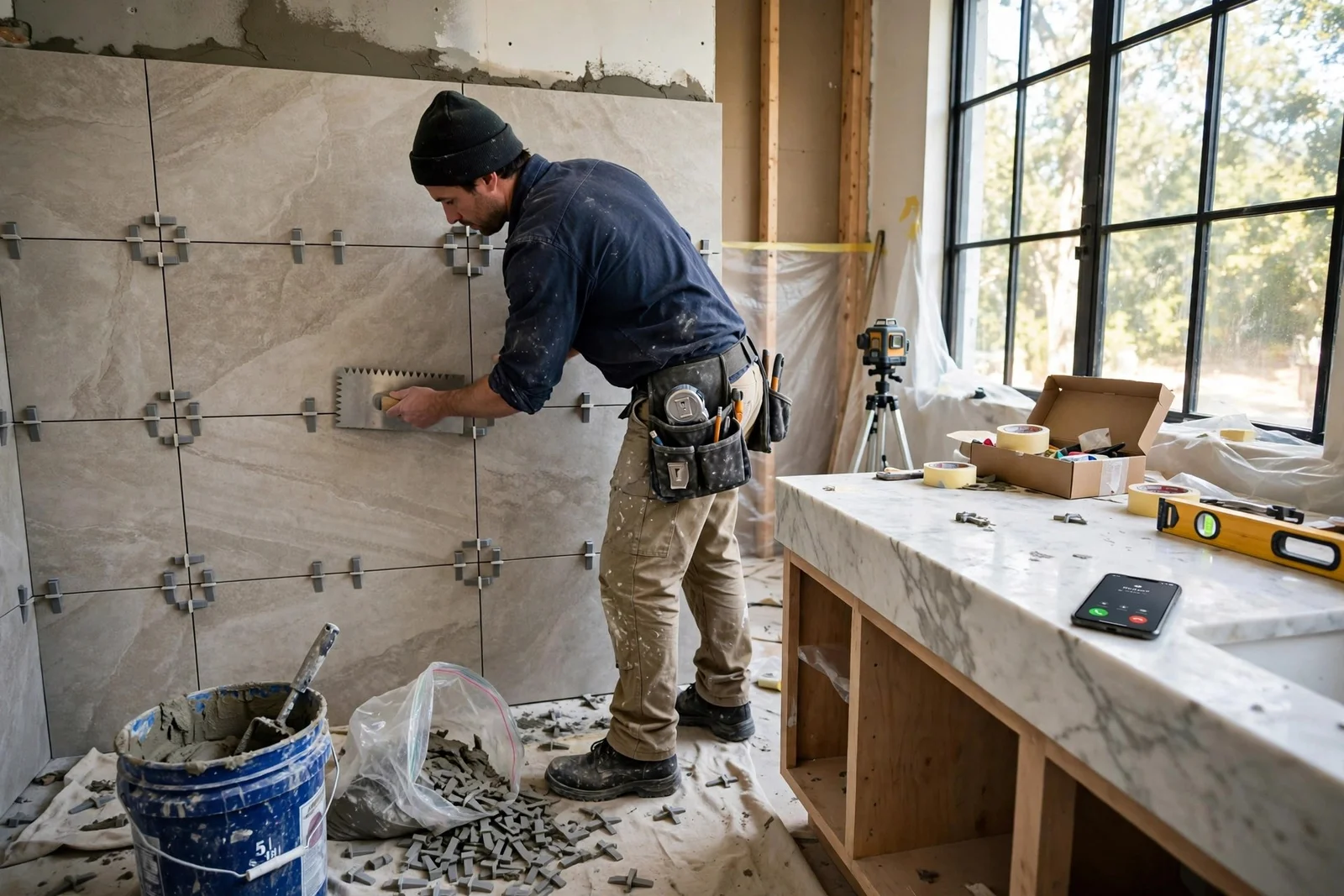
The phone rings during the install. The remodeler it belongs to is setting tile, hands covered in thinset, mid-course on a shower wall where stopping is not free either. On the other end is a homeowner planning a $20,000 bathroom. The call rings out to the truck. Most first-time callers never leave a voicemail. They call the next remodeler on Google.
One bathroom project pays for a lot of months. That one did not go to a better remodeler. It went to a faster one.
The first responder wins
The pattern shows up in every study of small business phones. BrightLocal found 62% of small business calls go unanswered. Home service data puts roughly 27% of inbound calls missed, and 2026 call data from Invoca suggests close to half of home service calls never reach a person. Industry research puts it at over 80% of first-time callers who hang up and dial the next remodeler instead of leaving a voicemail.
Remodeler case data shows 78% of homeowners award the project to the first responder. A bathroom is a $10,000 to $30,000 decision, and the remodeler who answered first and followed up best is usually the one who signs it. Speed to lead is not a slogan in this business. It is the whole game.
Run the remodeler math
Run the numbers the way our bathroom remodelers page does, with plainly illustrative starting numbers for a bathroom remodeling company: an $18,000 average project value, 10 calls a week, 30% of them missed, 35% of answered calls booking. At those numbers, 3 calls a week go unanswered, and about 1 of them would have booked. That is roughly one full bathroom a week, around $75,000 across a busy month, walking to the next remodeler in the search results.
The page adds the honesty note itself: no crew can book every project the calculator imagines, and capacity is real. These are illustrative starting points drawn from published home service data, not a remodeling industry survey. The point is the shape of the math. Even a fraction of that number is a full project.
The 9 PM problem
Homeowners plan remodels at night, at the kitchen table, looking at photos. CallRail's 2026 data shows 41% of online-booked jobs arrive outside business hours, and those evening inquiries are the highest-intent calls a remodeler gets all week. They arrive when nobody is watching the phone.
If the first reply comes tomorrow afternoon, another company has already booked the in-home consultation and started building trust. The lead did not go cold. It went to someone faster.
The decision that takes a month
A bathroom is one of the biggest checks a homeowner writes, and they decide slowly. They get three quotes, pin photos for a month, and talk it over at the kitchen table. The project rarely goes to the first quote. It goes to the remodeler who stayed in touch while they decided.
That is where estimate follow-up quietly dies. Two hours go into measuring, designing, and pricing a job. The proposal goes out by email, and then silence, not from not caring, but because nobody wants to feel pushy. Without follow-up, only about 20 to 30% of first-time customers ever call again on their own.
What "always answered" actually looks like
The fix is not asking a crew to grab a phone with thinset on their hands, and it is not a bigger office. It is making sure every call gets a first response in seconds, around the clock.
When a call comes in, it gets answered on the first rings, day or night. The AI talks through the project, the timeline, and the ballpark, and it identifies itself as the company's AI assistant when asked. Serious homeowners get booked into a consultation instead of bouncing to the next result on Google. When a call does slip through, the caller gets a text within seconds asking about their project, with a booking link, and the lead summary arrives by text or email. Nothing to install on the truck.
The handoff rules stay with the company: a caller with a leak from a current project rings the owner immediately, and everything else gets qualified, booked, and summarized for the morning. Estimate follow-up runs for the weeks a big decision actually takes, timed and polite, in your voice, and a person takes over the moment a homeowner replies. Every call, text, consultation, and proposal lands in one pipeline. No retyping measurements from a notebook, no double entry, no lost projects.
Setup is three steps: keep your number, tell it your business (your project types, your minimums, your service area, and your consultation hours), and it starts answering, texting back, booking, and following up, all in one inbox.
The next call arrives during the install whether anyone is free to answer it or not. The remodelers who win it are not the ones with more hours in the day. They are the ones whose first response never waits.