
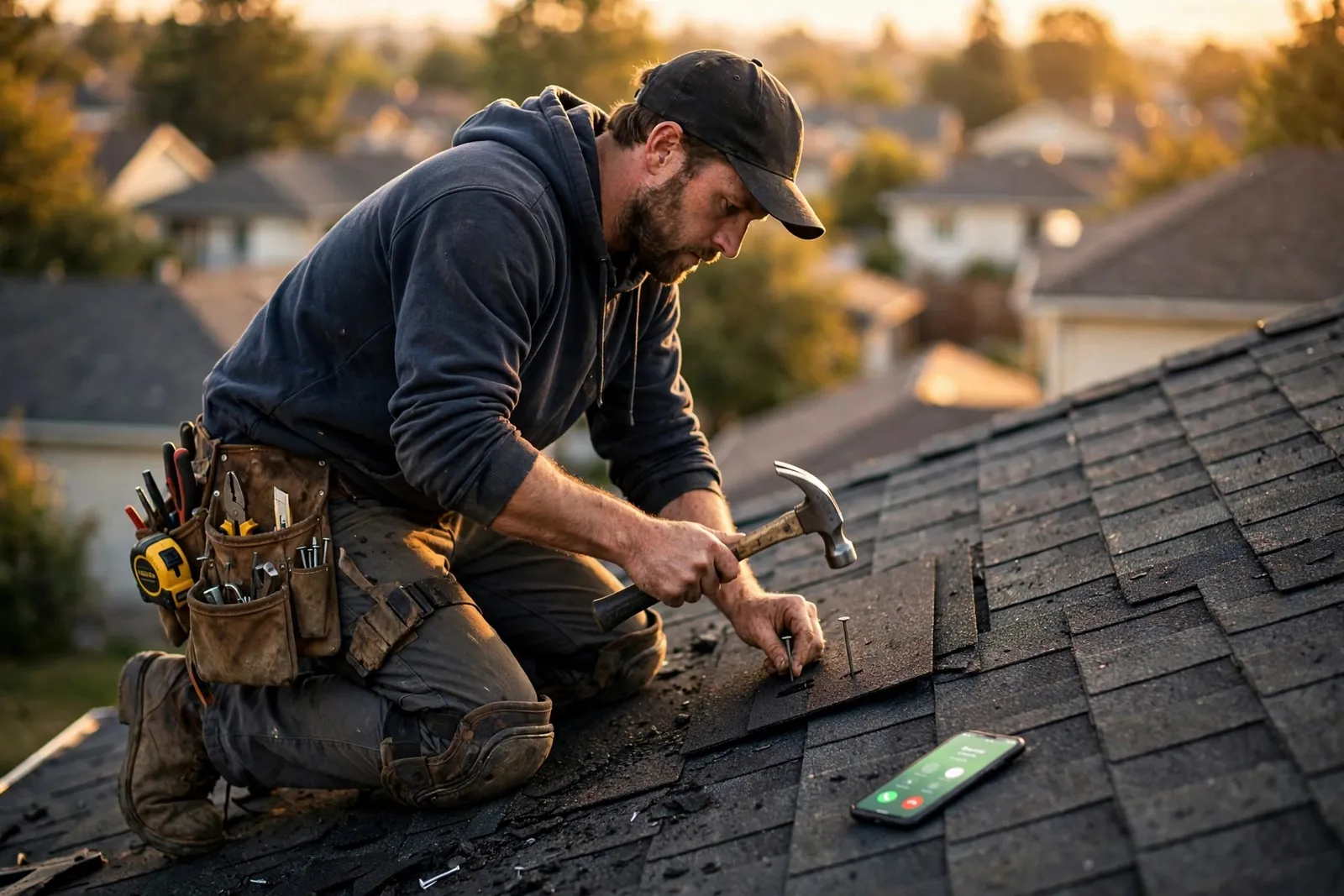
A hailstorm rolls through on a Tuesday, sometime after dinner. By Wednesday morning, every damaged roof in the zip code is shopping. Your crews are tarping the worst of it and climbing with nail guns in hand, and the phone starts doing something it does not do in a quiet week.
In the office, one or two people are working the phones while the calls stack up behind them. A caller hears a busy signal, or a phone that rings and rings, hangs up, and dials the next roofer on Google. Nobody made a mistake. There was simply nobody left to pick up.
The surge buries the office
Roofing runs on weather in a way most trades do not. One hailstorm can produce a month of calls in two days, and they land at the exact moment the company has the least slack, when every crew is already on a roof. Most of the callers who cannot get through never leave a voicemail. Industry research puts it at over 80% of first-time callers who hang up and dial the next company instead.
The studies agree on the direction. BrightLocal found 62% of small business calls go unanswered. Home service data puts roughly 27% of inbound calls missed, and 2026 call data from Invoca suggests close to half of home service calls never reach a person. Your exact number depends on your office and your crews. The direction is not in doubt.
Speed decides the rest. Remodeler case data shows 78% of homeowners award the project to the first responder. On a street where six roofs need work, the company that answers the phone and books the inspection first usually writes most of the contracts.
Run the in-season math
Run the numbers the way our roofers page does, with plainly illustrative figures for a company in season: a $9,500 average job value, 25 calls a week, 30% of them missed, 35% of the answered ones booking. That comes to roughly $25,000 a week, and around $100,000 across a single busy month, walking to the next roofer in the search results. The page says the quiet part out loud: roofing is seasonal, and no crew could book every one of those jobs in a surge week. The figures are illustrative starting points drawn from published home service data, not a roofing industry survey. Your numbers will differ. The direction will not.
The 2 AM problem
Then there is the call that cannot wait for the surge to pass. A leak starts at 2 AM, and a homeowner watches a water stain spread across the ceiling. CallRail's 2026 data shows 41% of online-booked jobs arrive outside business hours, and storms do not keep business hours either.
Treat every night call as an emergency and your on-call lead burns out by June. Treat none of them that way and a real leak ruins a ceiling, and your reputation, before morning. Somebody has to sort the active leak from the quote request at 2 AM, and right now that sorting lands on whoever is already exhausted, or on a voicemail box.
The estimates that quietly drift
The slow leak runs between storms. You climbed the roof, wrote the estimate, and helped the homeowner start the insurance paperwork. Then silence. Adjusters move slowly, homeowners get busy, and without steady follow-up the job drifts to whichever company stays in front of them.
Every drifted estimate is work you already did the hard part of: the climb, the inspection, the numbers. What went missing was not the skill. It was the follow-up.
What "always answered" actually looks like
The fix is not a bigger office, and it is not asking crews to answer from three stories up. It is making sure every call gets a live response, even when ten homeowners call at once.
When a call comes in after a storm, it gets answered on the first rings, with roofing triage. Active leaks get sorted from quote requests, the caller gets simple guidance to limit water damage, and dispatch follows your rules, including a tarp callout if that is your protocol. There is no busy signal and no hold queue, so the post-storm surge turns into a list of booked inspections in your CRM instead of a list of people who gave up. The AI identifies itself as your company's AI assistant when a caller asks.
If a call still slips through, the missed-call text-back fires in seconds, with a booking link for an inspection, and the lead summary lands with you by text or email. Timed, polite check-ins go out after every estimate, plus steady nudges while insurance paperwork moves, in your voice. The moment a homeowner replies, a person on your team takes over. Every call, text, and inspection lands in one CRM, and inspections book straight into your connected calendar. No leads scribbled on a shingle wrapper.
Setup is three steps: keep your number, tell it your business (services, service area, hours, dispatch rules), and it starts answering, texting back, booking, and following up, and you see everything in one inbox. Nothing to install on the truck.
The next storm is coming whether the office is ready or not. The companies that win the street are not the ones with the most people by the phones. They are the ones whose phones never go unanswered.