
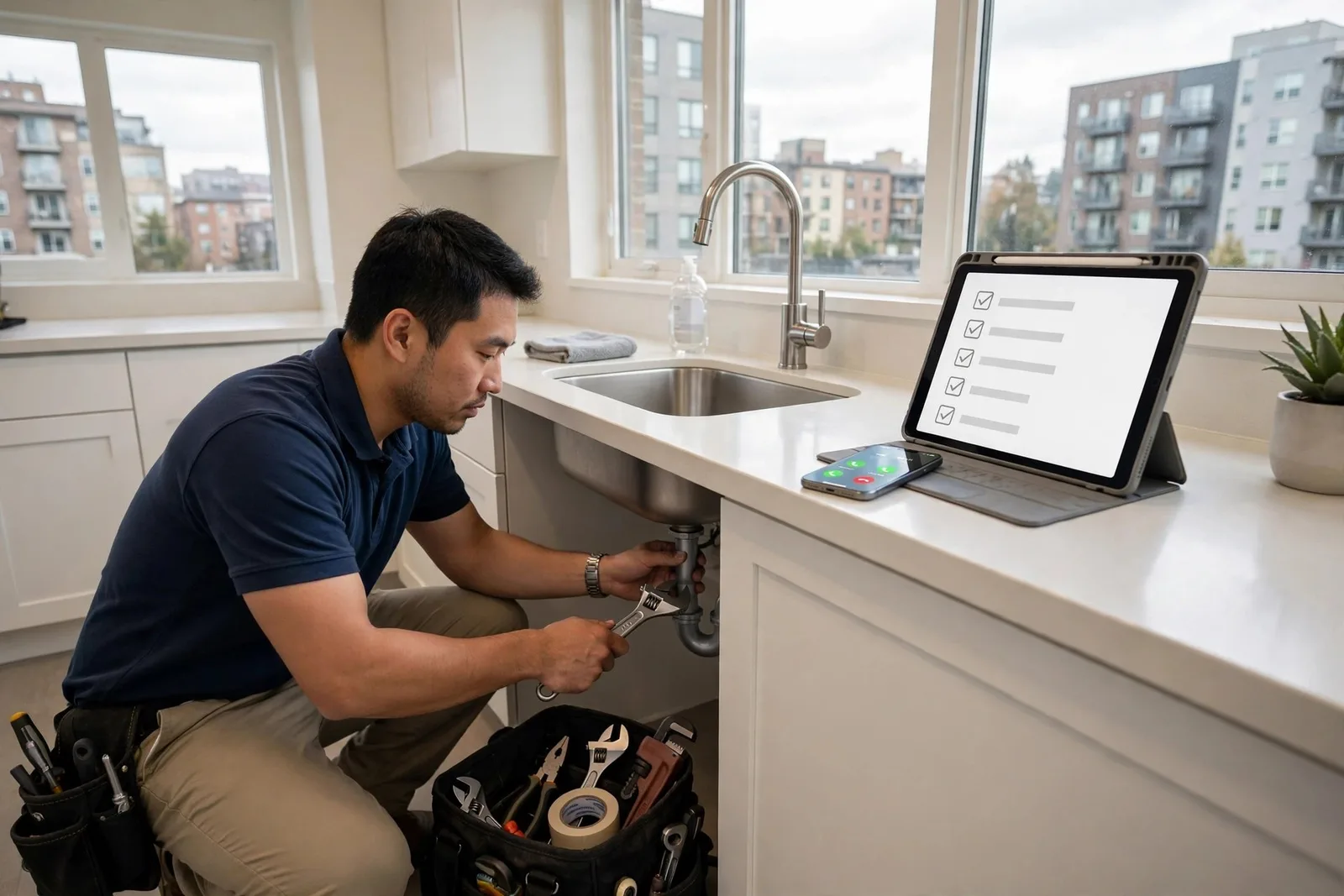
A pipe bursts at 2 AM. The tenant calls the only number they have, and if it rings out, the water runs until morning. The damage multiplies, and the story the owner hears is that nobody answered. In property management, no business on our page set gets more calls than yours, and somebody has to triage the hardest of them in the moment, every night of the year.
That call did not go to a better management company. It went to one that answered.
The first responder wins
The pattern shows up in every study of small business phones. BrightLocal found 62% of small business calls go unanswered. Home service data puts roughly 27% of inbound calls missed, and 2026 call data from Invoca suggests close to half of inbound calls never reach a person. Industry research puts it at over 80% of first-time callers who hang up and move on instead of leaving a voicemail.
And it is not only tenants. Remodeler case data shows 78% of homeowners award the project to the first responder, and owners choosing a manager behave the same way. The company that answers the landlord's first call like a professional usually gets the doors.
Run the property management math
Run the numbers the way our property management page does, with plainly illustrative starting numbers for a growing management company: an average value per booking of $1,800, a new door's first-year management fees, 45 calls a week, 30% of them missed, 30% of answered calls booking a showing, a visit, or a real next step. At those numbers, 13 to 14 calls a week go unanswered. Most are tenants and maintenance, and those matter for retention, but about 4 of them were worth a real conversation, at $1,800 in first-year value each. That is roughly $7,000 a week of door value that never got a first conversation.
The page adds the honesty note itself: plenty of missed calls in this business are routine, and no calculator can sort your mix for you. These are illustrative starting points, not a property management survey. The point is the shape: high volume plus a few high-value misses equals real money.
Three callers, one phone line
Tenants call about everything, owners call about money, and renters call about the one vacant unit that needs to be filled this month. A tenant with no water does not care that the manager is across town showing a vacant unit, and a landlord shopping for a new manager does not leave a voicemail either.
So the growth calls drown in the routine ones. A good renter asks about a vacancy, gets voicemail, and books a tour with the building down the street. Vacancy is the most expensive line in the business, and every unanswered inquiry stretches it by days. The owner lead that doubles the portfolio calls the same line as a tenant with a dripping faucet, and buried under routine calls, the highest-value inquiry of the month can wait two days for a callback. By then, another manager has it.
CallRail's 2026 data shows 41% of online-booked jobs arrive outside business hours, and property problems keep the worst hours of any industry here. Water heaters, furnaces, and pipes specialize in failing at night and on holidays.
Nothing is written down
The other leak is quieter. Tenant promises, vendor dispatches, and owner updates live in call logs, sticky notes, and one employee's memory. When a dispute lands, there is no clean record of who said what and when. The communication happened. The proof did not.
The same forgetting hits the owners you pitched months ago. The landlords who said not yet rarely get a second conversation, because nobody's week has a slot for remembering them.
What "always answered" actually looks like
The fix is not a bigger office. It is making sure every call gets a first response in seconds, around the clock, with triage that knows the difference between a burst pipe and a dripping faucet.
When a call comes in, it gets answered on the first rings, day or night. The AI sorts the real emergencies from the routine ones, runs your emergency protocol for the real ones, and turns the routine ones into clean work orders. It tells a tenant call from an owner call: it asks, and it learns your directory. Tenants get maintenance intake and status answers, owners get routed to the team, and prospective owners and renters get captured as leads in the same pipeline, each labeled for what they are. It identifies itself as the company's AI assistant when asked.
When a call does slip through, the caller gets a text within seconds asking what they need, with a booking link for showings, and the summary arrives by text or email. No lead and no emergency waits for a callback window. The handoff rules stay with the company: true emergencies and upset owners ring the manager immediately, and everything else gets handled, logged, and summarized for the morning. Follow-up with the landlords who said not yet runs as timed, polite check-ins in your company's voice, and a person takes over the moment one replies. Every call, text, showing, and work order lands in one pipeline, logged against the property and the caller, so when anyone asks what happened, the record answers, not someone's memory.
Setup is three steps: keep your number, tell it your business (your properties, your emergency protocols, your vendors, and your office hours), and it starts answering, triaging, texting back, and booking, all in one inbox.
The next 2 AM call arrives whether anyone is awake for it or not. The management companies who win it are not the ones with more hours in the day. They are the ones whose first response never waits.