
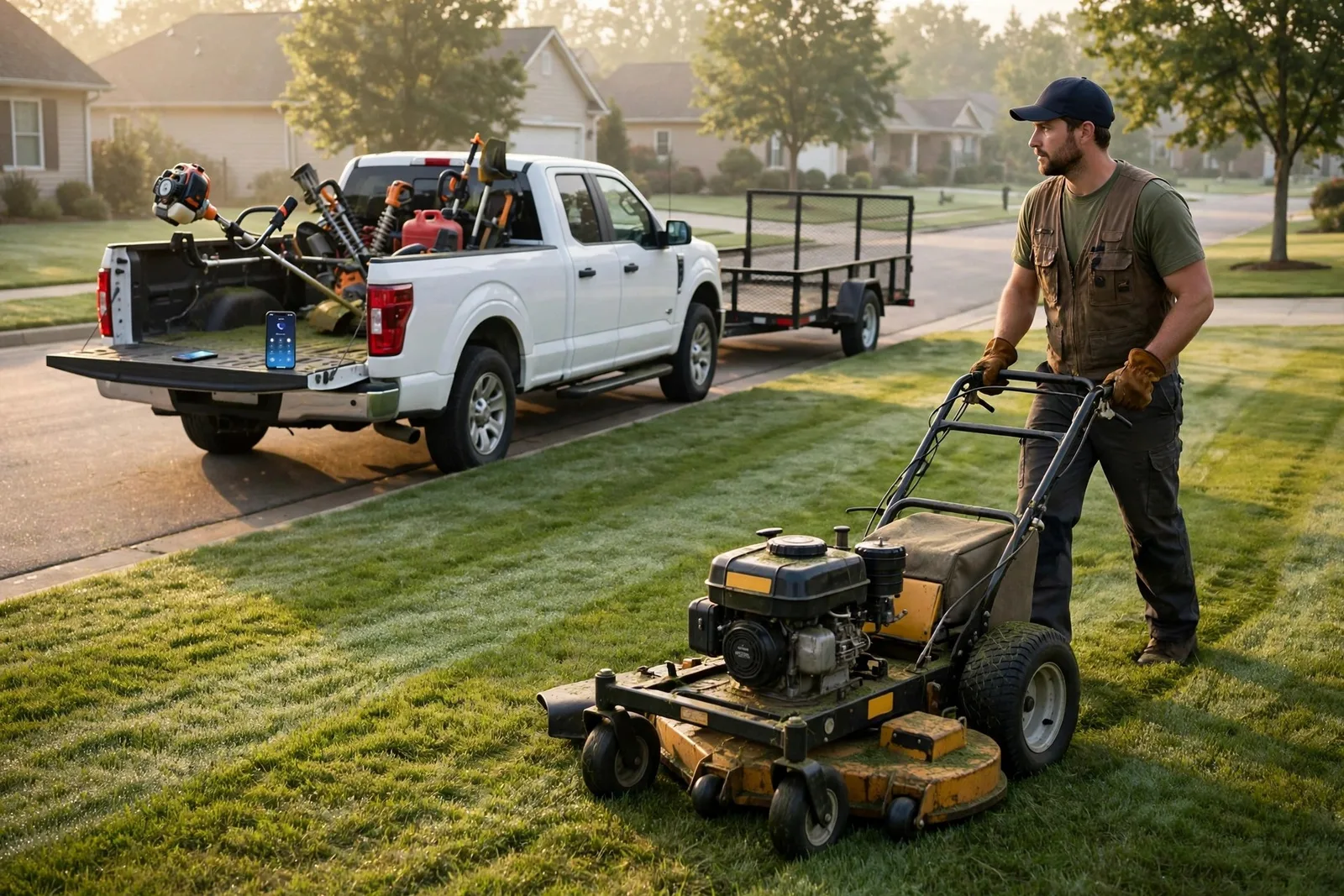
You cannot hear a phone over a mower, and you cannot answer one with a trimmer in your hands. The product is noise: mowers, blowers, trimmers. A phone in a pocket might as well be on the moon. So the call goes to voicemail, and most first-time callers never leave one. They call the next lawn care company on Google.
That job did not go to a better landscaping company. It went to a faster one.
The first responder wins
The pattern shows up in every study of small business phones. BrightLocal found 62% of small business calls go unanswered. Home service data puts roughly 27% of inbound calls missed, and 2026 call data from Invoca suggests close to half of home service calls never reach a person. Industry research puts it at over 80% of first-time callers who hang up and dial the next company instead of leaving a voicemail.
Remodeler case data shows 78% of homeowners award the project to the first responder. In lawn care the prize compounds: the spring account won in April pays every week until the leaves fall, and usually comes back next year.
Run the landscaping math
Run the numbers the way our landscapers page does, with plainly illustrative starting numbers for a lawn care company in season: an average job value of $2,200, a season of recurring service or a modest install, 30 calls a week, 35% of them missed, 45% of answered calls booking. At those numbers, 10 to 11 calls a week go unanswered during the rush, and about 5 of them would have booked, at $2,200 each. That is roughly $10,000 a week while the season is hot, walking to the next lawn company in the search results, and the recurring part of it would have paid for years.
The page adds the honesty note itself: lawn care is seasonal, and these are illustrative starting points drawn from published home service data, not a landscaping industry survey. Your call volume and your average account are the numbers that matter. The point is the shape of the math. Even a fraction of that number is a full season of recurring work.
Six weeks decide the season
CallRail's 2026 data shows 41% of online-booked jobs arrive outside business hours. Homeowners plan yard projects at night and on weekends, and a Saturday caller with a patio in mind is the highest-intent lead of the season. That caller reaches an empty office.
And the rush never sends just one call. The phone barely rings in February, then explodes in April when every homeowner in town wants service at once, exactly while crews are running dawn to dusk. Call volume triples while the office is still one person deep. The surge hits a busy signal or an unanswered phone, and the recurring accounts the year depends on go to whoever picked up.
Won on the phone, lost in the quiet
Plenty of landscaping work is lost after the walk. The property was walked, the patio, cleanup, or full maintenance contract quoted, the number sent, and then silence. Homeowners sit on landscape quotes for weeks. Without follow-up, only about 20 to 30% of first-time customers ever call again on their own.
The drift continues after the signature, too. Renewals, fall cleanups, and snow conversations all happen while the company is buried in the current season's work. Clients who do not hear from the company drift to the company that called first, and a book built over years thins out one quiet month at a time.
What "always answered" actually looks like
The fix is not asking a crew to answer over a mower, and it is not a bigger office. It is making sure every call gets a first response in seconds, around the clock, surge included.
When a call comes in, it gets answered on the first rings, day or night, even in the middle of the spring rush. The AI captures the property, the service, and the timeline, and books the estimate or the start date instead of taking a message. It identifies itself as the company's AI assistant when asked. When a call does slip through, the caller gets a text within seconds asking what they need, with a booking link, and the lead summary arrives by text or email. Nothing to install on the truck.
The handoff rules stay with the company: a sprinkler flood or a tree on a fence rings the owner immediately, and everything else gets qualified, booked, and summarized for the morning. Estimate follow-up runs as timed, polite check-ins after every quote: patios, cleanups, installs, and seasonal contracts, in the company's voice, and a person takes over the moment the homeowner replies. Every call, text, estimate, and account lands in one pipeline and books straight into the calendar. No leads on the truck's sun visor, no double entry, no spring leads lost in a notebook.
Setup is three steps: keep your number, tell it your business (services, service area, seasonal calendar, and booking rules), and it starts answering, texting back, booking, and following up, all in one inbox.
The next call arrives while the crew is on a route whether anyone is free to answer it or not. The landscaping companies who win it are not the ones with more hours in the day. They are the ones whose first response never waits.